News · New this week
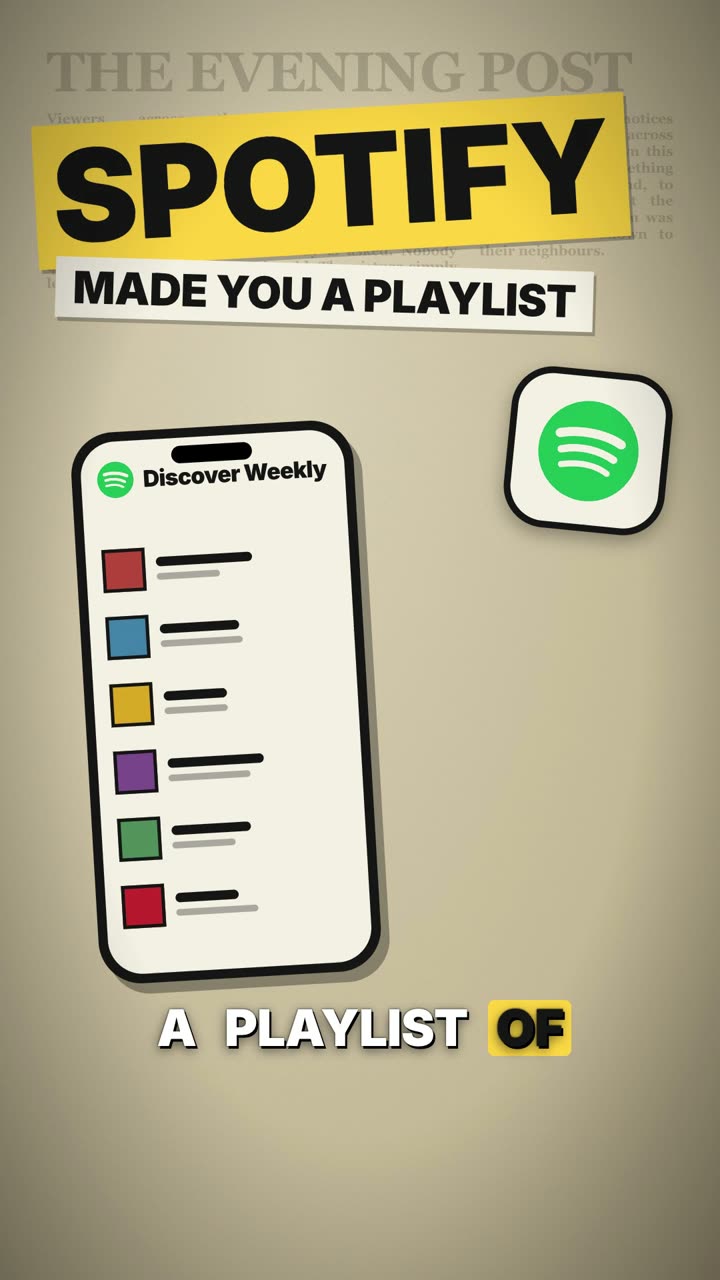
Spotify Discover Weekly: how it picks songs you haven't heard
Nobody at Spotify picks your playlist. A system builds it from three signals, mixed together.
Nobody at Spotify picks your Discover Weekly. A system builds it for you.
Most people assume otherwise. A playlist full of songs you've never heard, where you love half of them, feels like a person with good taste made it. It's a recommendation system, and the public descriptions of it are easy to follow.
One caveat first. Spotify has not published its exact system, so everything below is a simplified view.
Three signals, one playlist
Public descriptions say the playlist mixes three things.
People who listen like you. First, it looks at the people who listen to the same songs as you. If they love a song you haven't played, that song becomes a candidate. You never have to say what you want. Your overlap with other listeners does the asking for you.
What the internet writes. Second, it reads what the internet writes about the songs. Songs described in similar words get grouped together. That gives the system a way to relate songs through language, not just through who played them.
The audio itself. Third, it listens to the audio to find songs that sound alike, even if nobody has played them yet. This one matters for a practical reason. Listening habits and written descriptions both depend on people having heard and talked about a song. Audio doesn't, so a song with no plays can still be matched to something you already like.
Why the mix matters
Put together, you get your taste, other people's taste, and the sound itself, all mixed together. It's more than one trick.
The three signals look at different things. Listener overlap works from behavior. Text works from how people describe songs. Audio works from the sound. Because they start from different places, they can each bring in songs the others wouldn't.
We don't know the details of how Spotify weighs or combines them, and the public descriptions don't say. So treat this as a mental model, not a spec.
If you build recommendations yourself, the useful takeaway is the shape of it. Taste data from people, language about the content, and the content itself are three separate inputs, and you can think about each one on its own.
What to do with this
Next time a Discover Weekly track hits, ask which signal likely found it. Was it something people like you play, something described in words you'd use, or something that just sounds like your favorites?
Then send the reel to the friend who says that playlist is all luck. And if you want to compare notes, tell us which song Discover Weekly got right.